Malta (or the Republic of Malta) has an incredibly colorful and rich history. Thanks to its perfect strategic location (95 km south of Sicily and 290 km east of Tunisia), this picturesque archipelago has been inhabited by several nations throughout history, including the Phoenicians, Carthaginians, Romans, French, and British. It was from the latter country that the Republic of Malta gained its independence in 1964. The date of this country’s accession to the European Union is easy to remember, as it occurred on the same day as that of the Czech Republic—namely, May 1, 2004. The official languages are Maltese, English, and Italian, and the official currency is the euro.
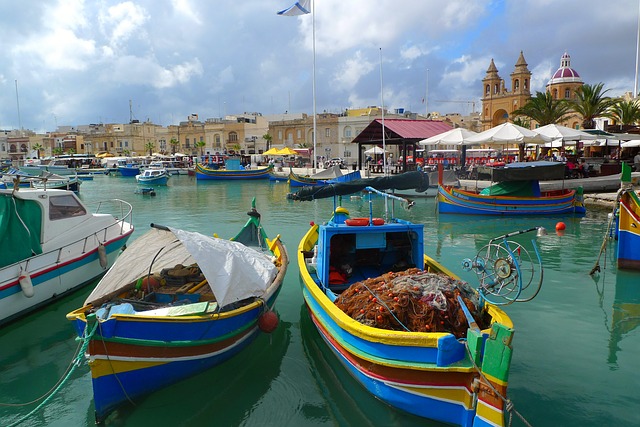
In terms of demographics, Malta is a very densely populated territory. Roughly 450,000 residents of all possible nationalities live side by side in an area of just 316 km². Defining a typical “Maltese” is therefore about as easy as maneuvering two vehicles past each other in the narrow streets of Maltese cities. This also shapes the locals’ way of life in general. For Central Europeans, the first glimpse of traffic and the overall lifestyle in the cities during a typical workday is enough to cause a few wrinkles on the forehead. However, the initial impression of a chaotic system fades after a few hours, and you’ll discover that amidst the mix of noise, honking, and cursing, there is an order to it all—and it works.
Geographically, Malta consists of several larger and smaller islands, though only three are permanently inhabited. Specifically, the island of Malta (246 km²), which is also home to the international airport and the capital city of Valletta; Gozo (Ghawdex in Maltese, 67 km²); and finally, the smallest inhabited island, Comino (Kemmuna in Maltese, 3 km²), where reportedly only six people live permanently. From my own experience, I definitely recommend visiting all of the above-mentioned islands. For just a few euros, ferry companies will take you from the port city in the north of Malta to both of them in a matter of minutes. There is something for everyone—whether you’re a lover of relaxation, with several sandy or rocky beaches at your disposal, or an adventurous type who can take advantage of the abundant opportunities for diving or rock climbing on the local coastal cliffs, which are almost ubiquitous. Thanks to its rich history, the heart of every architecture lover will also be delighted. The countless places you can explore on the islands are listed in handy brochures for tourists, available at nearly every public location.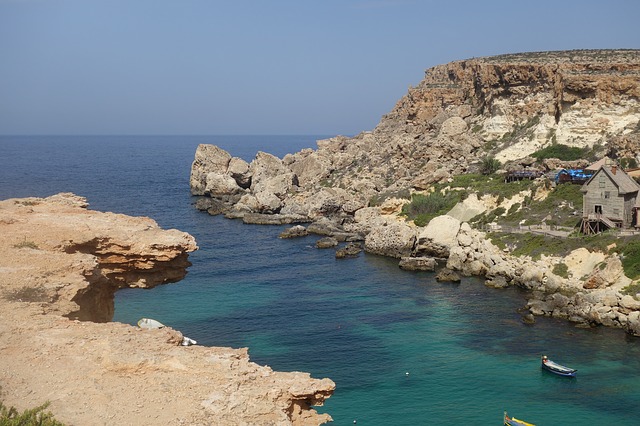
I recommend traveling to Malta outside the peak season, when it is generally not crowded with tourists. The ideal time to visit is during the fall months, when the Mediterranean climate offers air and sea temperatures around a pleasant 20°C.
Have a great trip!